

Colombia wasn’t a destination we’d rushed into.
It’s not always the first place people consider, but it really does reward those who do. There’s a richness to it. The landscapes, the architecture, the food. And, a contrast between places that makes moving through it feel varied without being complicated.
This is the Colombia travel itinerary we’d recommend after spending time there.
We spent just over a week moving between Cartagena and Bogotá, with a brief stop in Medellín along the way. The trip was initially centred around an invitation to Accor’s HERA Voyage event in Cartagena. Something only the top 30 travel agencies around the world get to experience. But, it quickly became something broader – a chance to properly understand how Colombia works as a destination, and how we’d piece it together.
What stayed with us wasn’t just the hotels, but the shift between places. Caribbean coastline, colonial old towns, and a capital set high in the Andes. Each has a completely different pace and feel.
Medellín
We started in Medellín.
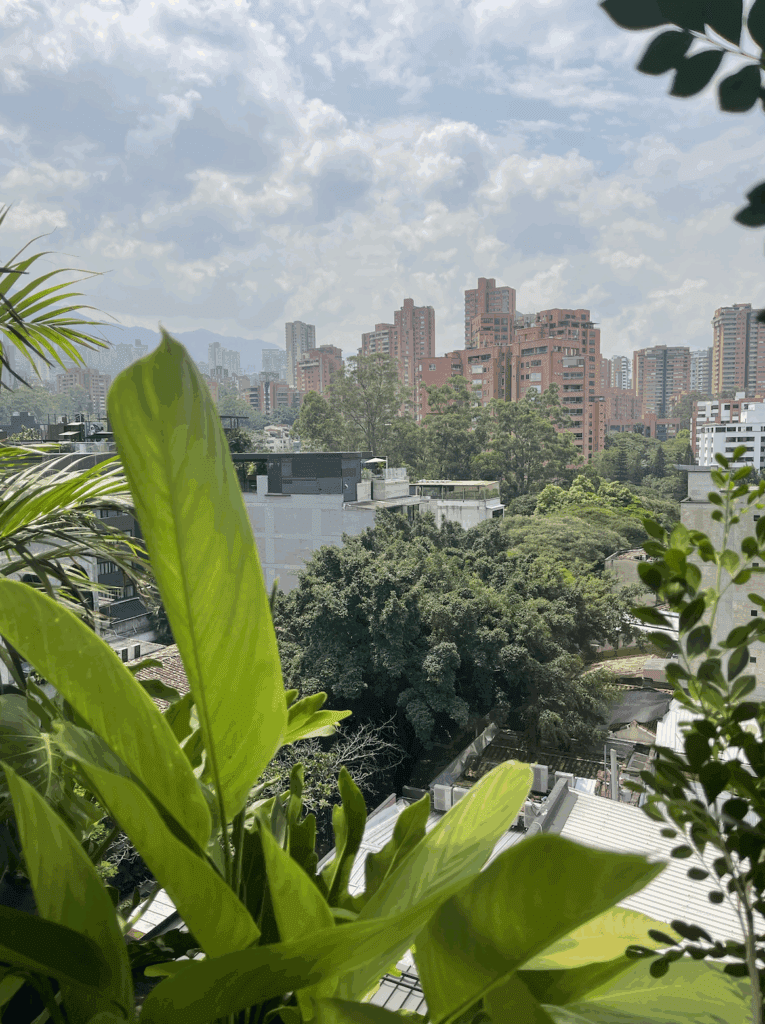
Set in the Aburrá Valley, the city has a noticeably softer climate than Cartagena. It’s often referred to as the “City of Eternal Spring”. It feels more modern than you might expect, with a steady, lived-in rhythm rather than anything overly polished.
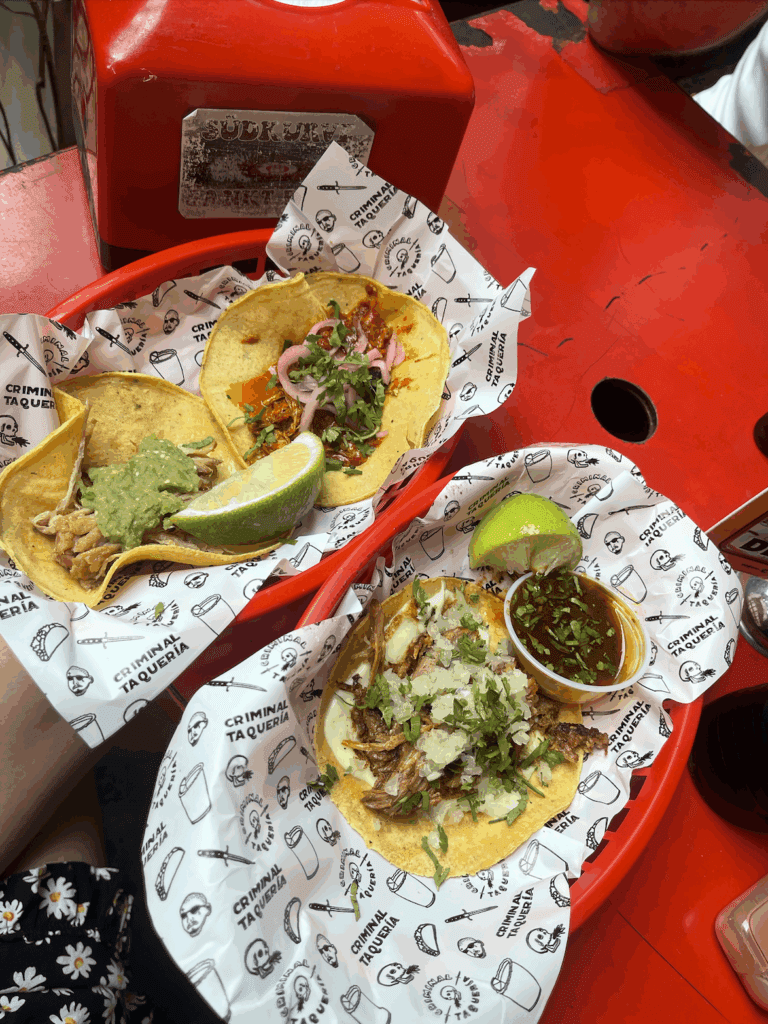
We didn’t spend long enough there to fully explore it, but it works well as an introduction to the country. We did, however, manage to find our way to Criminal Taqueria – easily some of the best tacos of the trip.
For longer trips (and if you want to add an urban layer to your itinerary), we’d definitely build it out further.
Cartagena
Cartagena is where most trips begin, and it makes sense.
The old town is compact and self-contained, with narrow streets, colourful façades, and balconies heavy with greenery. It’s warm – often intensely so – and you feel it quickly. The days naturally slow down because of it. Mornings are for walking, afternoons tend to retreat indoors, and evenings are when the city comes back to life.
There’s a constant energy to it – street vendors, music drifting between buildings, the occasional horse and carriage passing through. It’s busy, but contained.
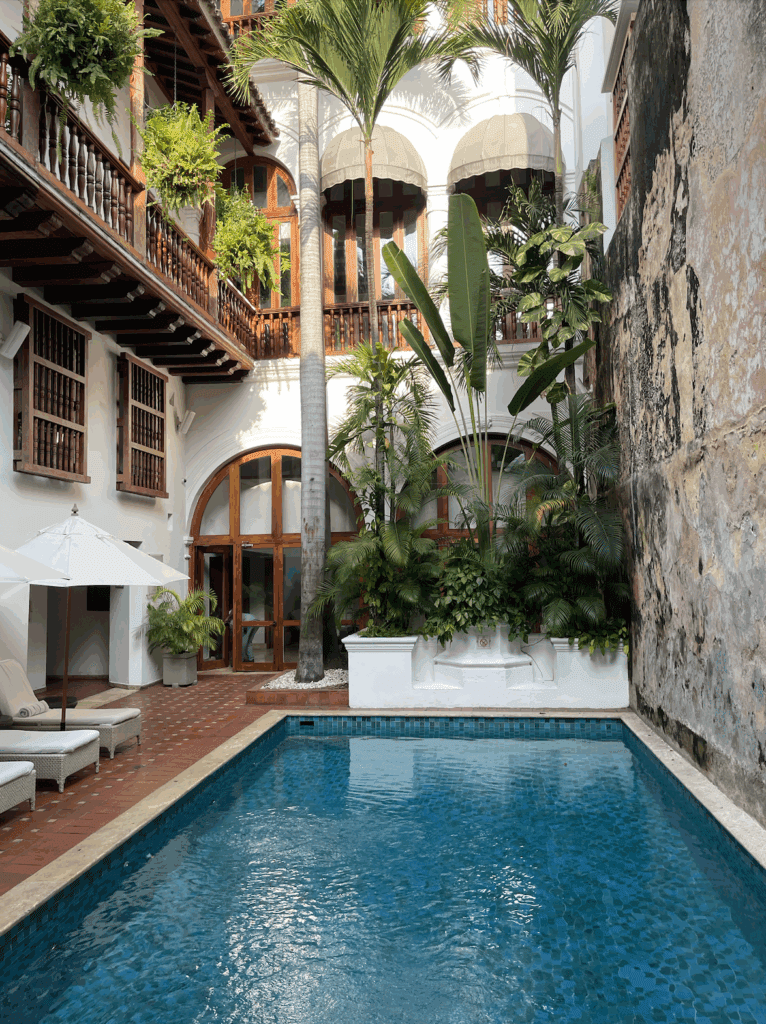
We stayed at Casa San Agustín, which felt like one of the more characterful options in the old town. It’s set across a series of restored colonial houses, and you move through it almost as you would the city itself – through courtyards, corridors, and open spaces. The pool is a standout (pictured below) – not a single defined area, but something that wraps and weaves through the ground floor, more architectural than decorative.
Alma, the hotel’s restaurant, is one of the more established names in Cartagena. It’s the kind of place where you’d happily spend an evening without needing to go elsewhere – polished, but still relaxed enough to feel in keeping with the city.
A short walk away, Sofitel Legend Santa Clara offers something on a very different scale. Set within a former convent, it’s one of Cartagena’s landmark hotels – larger, more formal, and with a strong sense of history running through it. The central courtyard is particularly striking, and the overall feel is more classic than boutique. It’s a hotel that leans into its past, but does so well.
Cartagena itself doesn’t need long. Two or three nights is usually enough – it’s less about ticking things off, more about settling into the atmosphere and letting the city unfold around you.

Barú
From Cartagena, Barú is an easy transition – around 45 minutes by boat from the harbour (we were treated to a wonderful yacht journey, and we can secure the same for you) – but it feels noticeably removed from the moment you arrive.
The water shifts colour, the pace drops, and everything opens out.
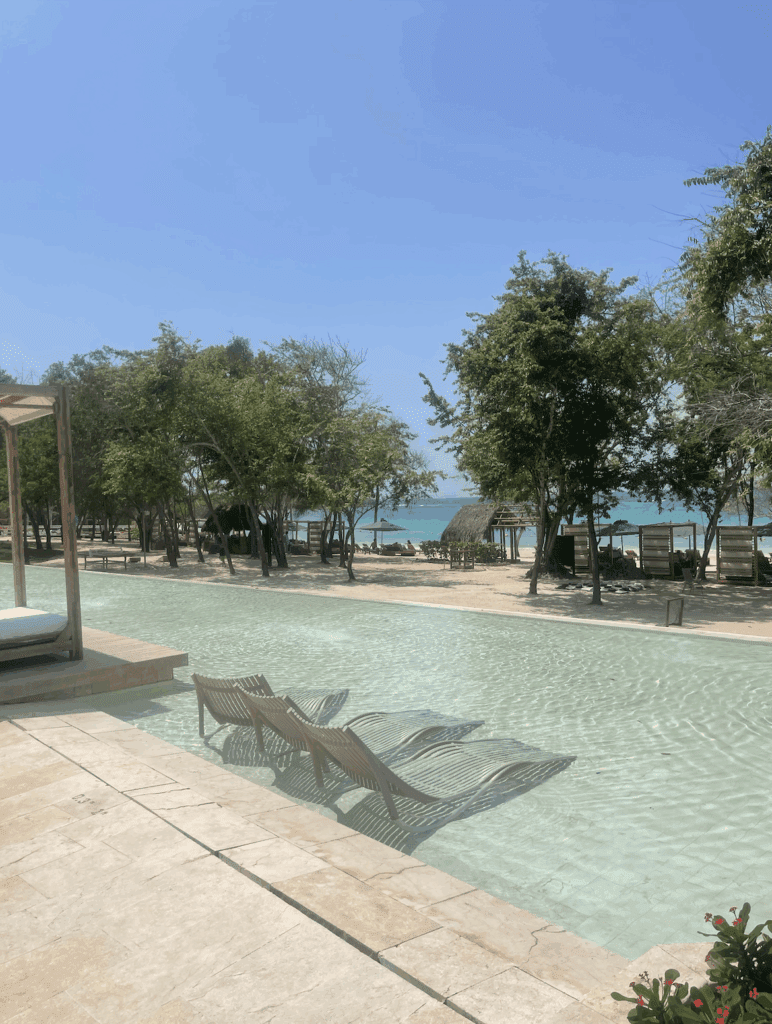
We visited Sofitel Barú Calablanca, which works particularly well as a follow-on from the city. The property stretches along the beachfront, with a series of low-rise buildings that feel integrated into the landscape rather than imposed on it. There’s a variety of restaurants, a strong spa offering, and enough space that it never feels crowded.
It’s not trying to be overly exclusive or overly designed – and that’s part of its appeal. It feels relaxed, easy, and well-suited to a few days of switching off after Cartagena.
One thing worth noting more broadly is that Colombia’s Caribbean coastline doesn’t quite mirror the polished feel of some other island destinations. The water can be less predictable, and the beaches vary. But places like Barú offer a more considered, comfortable way to experience it – particularly when paired with the city.

Bogotá
Set at over 2,600 metres above sea level, the shift in temperature when arriving in Bogotá is immediate – cooler, fresher, and a noticeable contrast to the coast. The city feels more layered, less obviously picturesque. But it has a depth that becomes clearer the more time you spend in it.
There’s a strong food scene – some of the best meals of the trip were here – along with galleries, museums, and neighbourhoods that feel distinctly different from one another.
We stayed at Four Seasons Bogotá, which is well positioned in Zona T – a walkable area with shops, restaurants, and a steady pace throughout the day. It’s a straightforward, well-run base, and it works well for exploring the city without overcomplicating things.
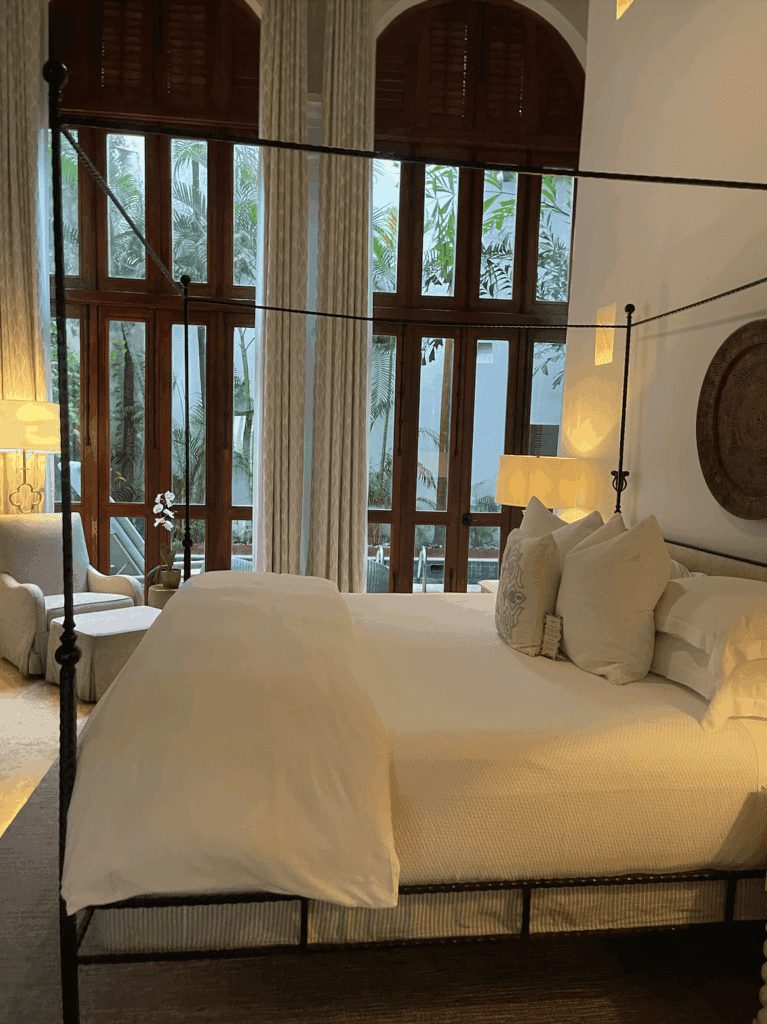
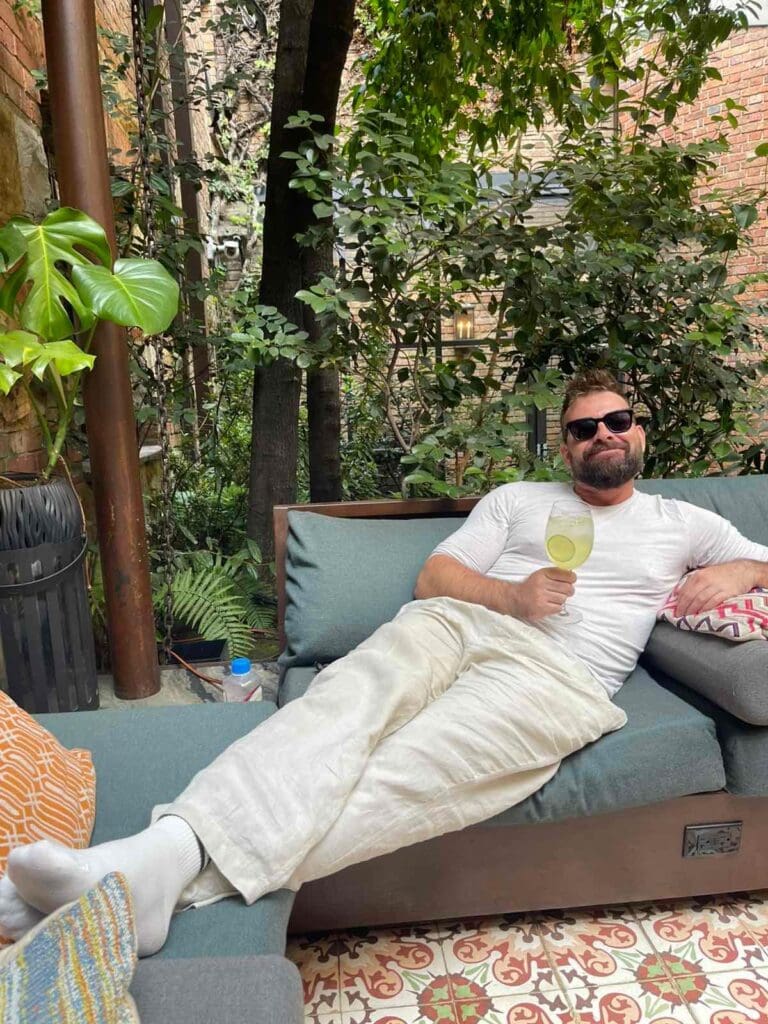
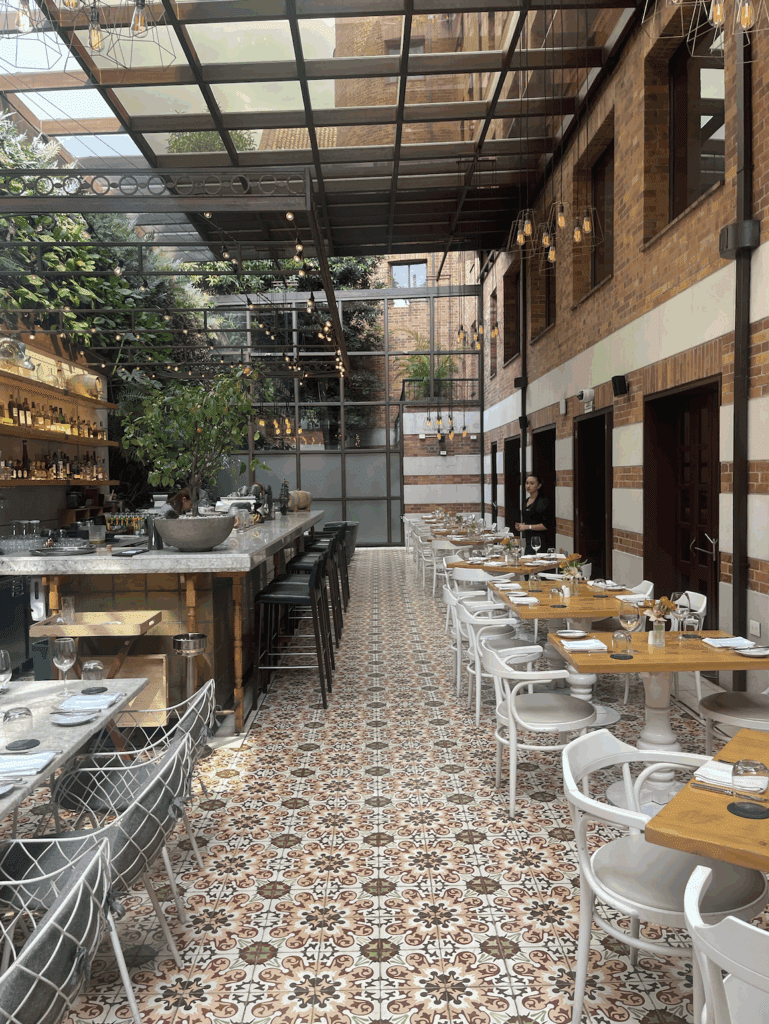
We also stopped by Four Seasons Casa Medina, which has a very different feel (pictured below). Set within a historic building, it’s smaller, more intimate, and leans more traditional in its design. It felt quieter, slightly more tucked away – the kind of place that appeals if you’re looking for something with a bit more character.
Bogotá isn’t always prioritised in shorter trips, but we couldn’t recommend stopping by higher. Even a couple of nights gives the itinerary more depth and balance.
When to visit Colombia
Colombia works well year-round, but it’s worth understanding how the regions differ.
Cartagena and the Caribbean coast are consistently warm and humid, with December to April generally offering the driest conditions. Bogotá, because of its altitude, is cooler and more changeable – you’ll want layers here, regardless of the time of year.
Rather than focusing on a single “best” time, it’s more useful to think about how the destinations complement each other across the same trip.
It’s a strong option for those who have travelled through parts of Central America or the Caribbean and are looking for something that feels a little less expected. It also works particularly well for couples or small groups – somewhere you can combine culture, food, and time by the coast.
How we’d plan your trip to Colombia
Cartagena, Barú, and Bogotá work well together over 8–10 days.
From there, it can be extended further – deeper into Colombia, or paired with another destination. It works particularly well alongside Mexico or Peru, depending on how you want to shape the trip.
We’d also look carefully at where you stay. Properties like Four Seasons Bogotá and Casa Medina work well in the capital. And, with the opening of Four Seasons Cartagena, there’s a strong opportunity to build in something new at the start of the trip. Through our partnerships, we’re able to offer a number of additional benefits – from room upgrades and early check-in to more tailored support on the ground.
We came away with a much clearer sense of where Colombia fits.
It’s not about trying to see everything or rushing between places. When it’s put together properly, it offers a balance that feels both varied and easy – and still, in parts, relatively underexplored.
If it’s somewhere you’ve been considering, you can get in touch with the team to start shaping your trip.


