
We’ve been known to choose a hotel because of a chair.
Or a staircase. A particularly good piece of marble. A lobby that makes us immediately reconsider everything in our own sitting room. For some of us at RASK, what’s inside a hotel matters almost as much as where it is.
And right now, hotel design is particularly interesting. The identikit version of luxury – beige, beautiful, expensive, and almost impossible to geographically place – is losing ground to hotels with much stronger personalities. The best have interiors that tell you something about where you are, who designed them, or the people who have lived there before.
From Ilse Crawford’s deeply comfortable Stockholm townhouse to Bill Bensley’s wonderfully eccentric vision of 1920s Hanoi, these are the design-led hotels we’d happily travel for based on their interiors alone.
Ett Hem, Stockholm
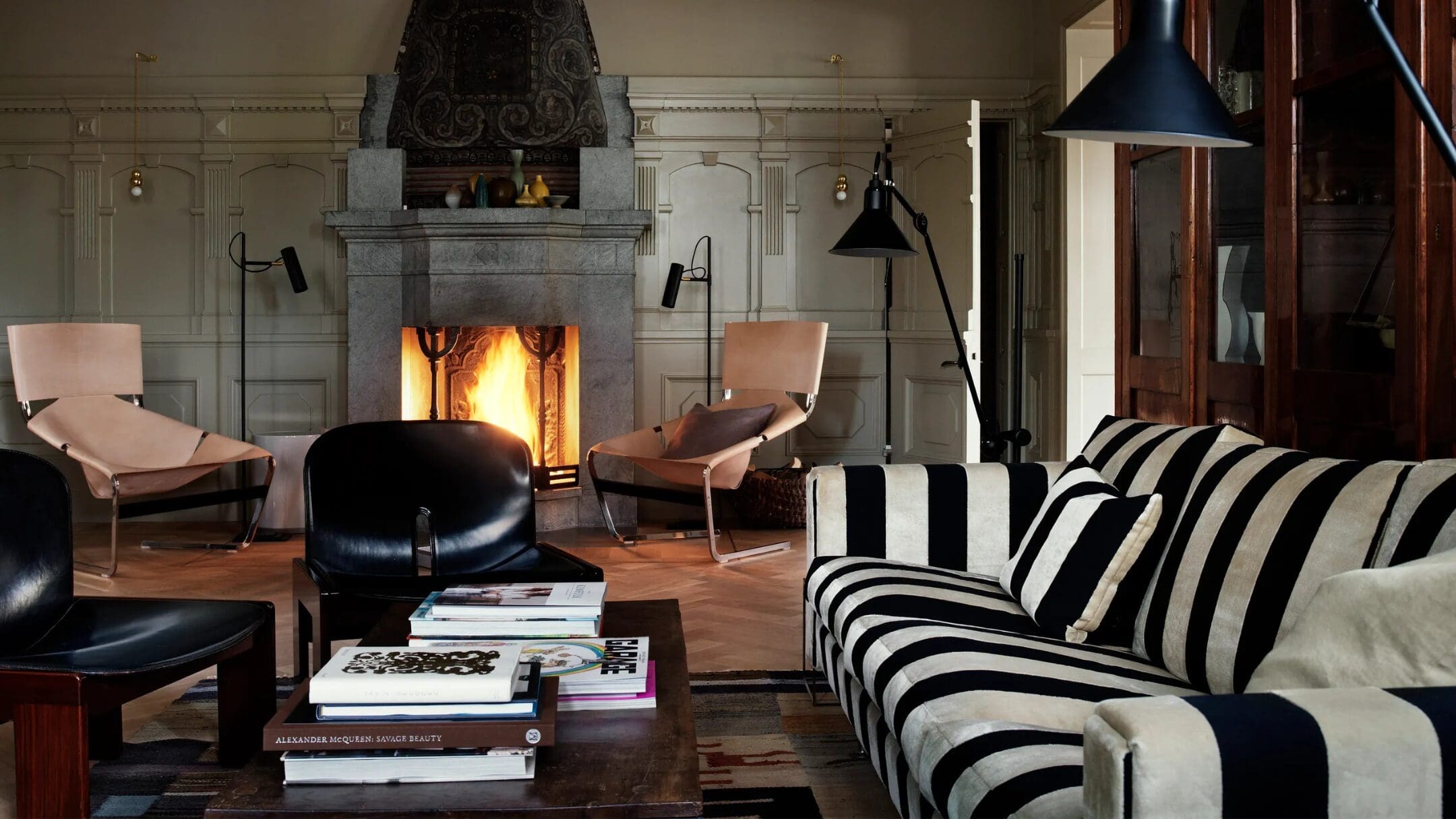
There’s a reason Ett Hem appears on almost every design lover’s Stockholm list.
The original house was built as a private residence in 1910, and when owner Jeanette Mix worked with Ilse Crawford to turn it into a hotel, the intention wasn’t to erase that history. Quite the opposite. Ett Hem translates literally as “a home”, and that’s still the idea: guests are encouraged to use the spaces rather than admire them.
The interiors have Crawford’s fingerprints all over them: tactile fabrics, warm timber, beautifully worn leather, books, art, objects and furniture that look collected rather than installed. There’s Arts and Crafts heritage underneath it all, but nothing feels preserved behind glass.
What Ett Hem did particularly well – and well before it became the default brief for every new boutique hotel – was make luxury feel domestic. You can sit by the fire, raid the kitchen, move between rooms and find somewhere that suits your mood. It’s polished, but never precious.
The design detail we love: the complete absence of a traditional hotel lobby feeling. You arrive at a house, and that illusion holds remarkably well.
Capella Hanoi, Vietnam
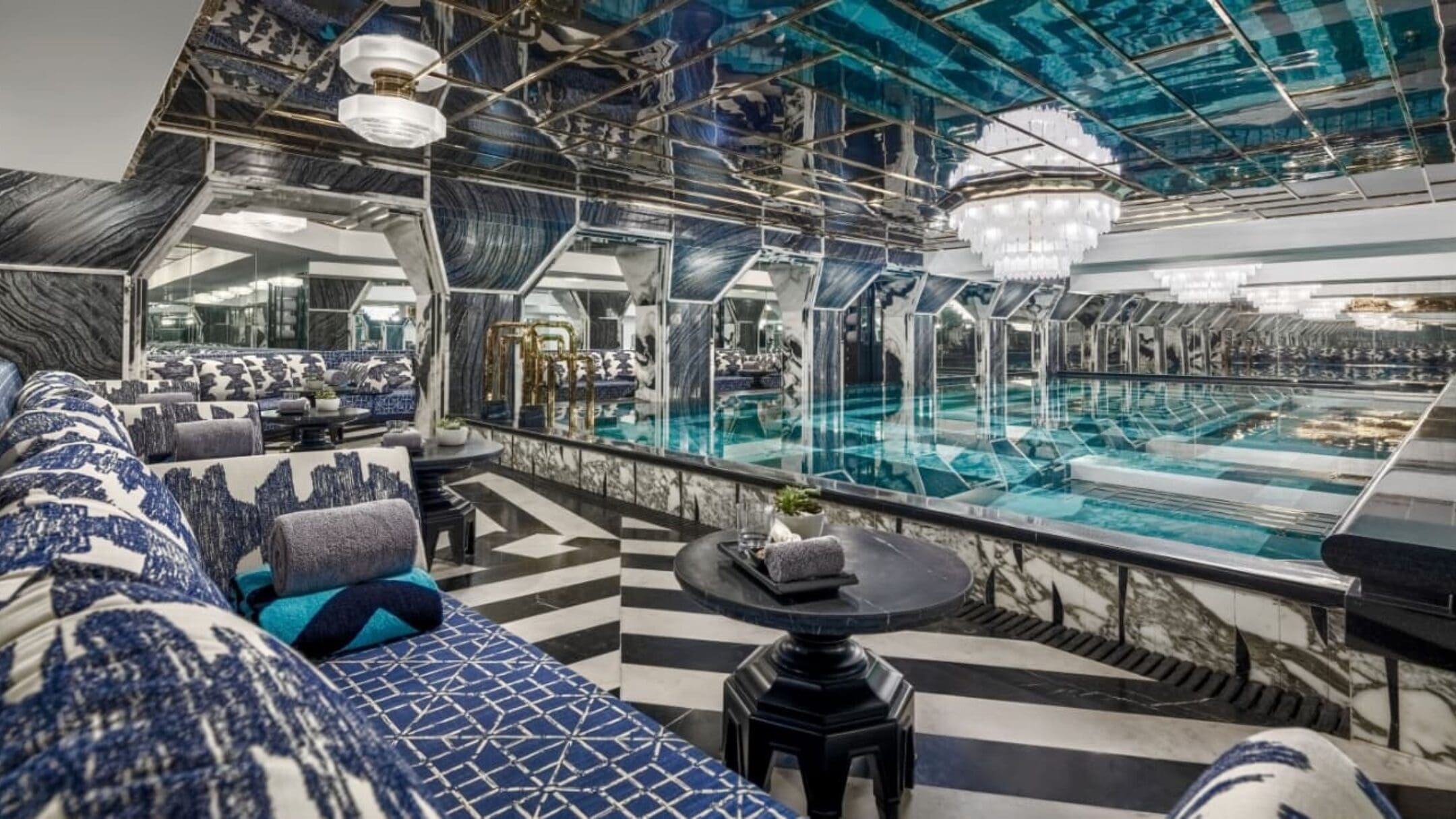
At the opposite end of the spectrum is Capella Hanoi, where Bill Bensley has absolutely no interest in restraint.
Just steps from Hanoi Opera House, the 47-room hotel is built around an imagined history of opera singers, actors, composers, designers and glamorous spectators passing through the city in its theatrical heyday. Each room takes its name and inspiration from a different character from the world of opera.
Bensley collected more than 1,000 pieces of opera memorabilia for the project – costumes, photographs, theatre programmes, set pieces and vintage objects – while everything from furniture to lighting was custom designed by his studio. Even the restaurants continue the story: Backstage is filled with trunks, costumes and props, while the pool becomes a wonderfully excessive Art Deco fantasy in black, white and blue.
It shouldn’t work. An enormous amount is going on. But that’s exactly why it does. This isn’t a hotel that has been decorated; it’s an entire fictional world that happens to contain bedrooms.
The design detail we love: every room has its own identity, so choosing where to sleep becomes part of the fun.
La Posta Vecchia, Lazio
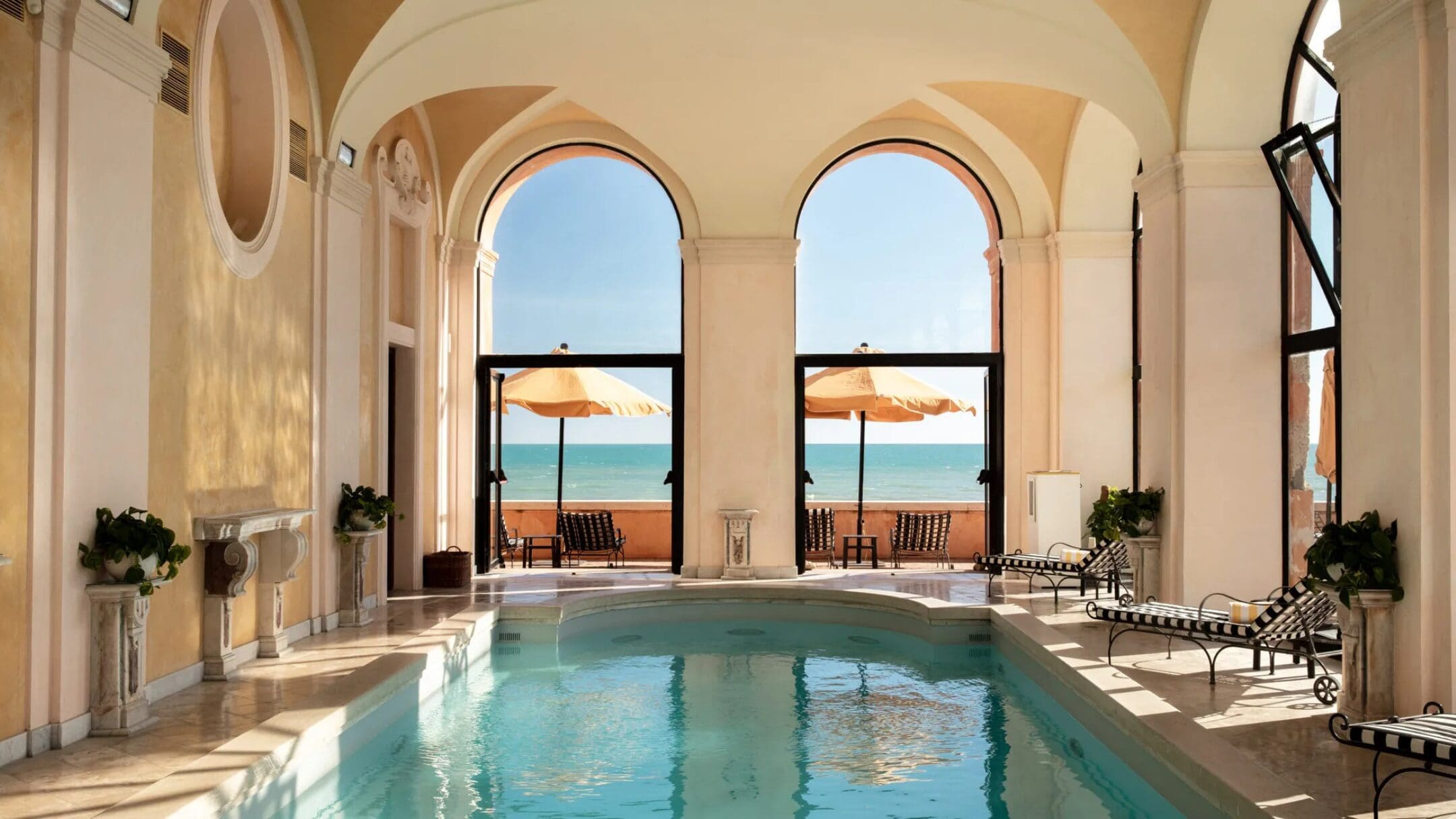
Some hotels hire an interior designer to create a sense of history. La Posta Vecchia already has several centuries of it.
Sitting on the Tyrrhenian coast around 40 minutes from Rome, the 17th-century villa was once owned by the Orsini family before becoming the Italian home of J. Paul Getty in the 1960s. Getty filled it with art, antiques and Renaissance furnishings, many selected with art historian Federico Zeri, and much of that collection remains in the hotel today.
Expect 17th-century tapestries, Roman busts, old maps, ornate furniture and rooms where the temptation to strip everything back has thankfully been resisted. The Getty Suite goes furthest, with woven carpets, elaborate wall tapestries, antique mirrors and copper taps.
The Sciò family – also behind Hotel Il Pellicano – has since brought its own eye to the house, keeping the eccentricity and grandeur while making it feel relevant to how people actually want to stay now.
And then there’s what lies underneath it. During Getty’s restoration, remains of a Roman villa dating to the second century BC were uncovered beneath the property. Today, mosaics, marble and archaeological finds sit in the hotel’s own underground museum.
Not many hotel basements can compete with that.
The design detail we love: nothing matches in the conventional sense, yet the centuries of art, antiques and architecture somehow belong together.
Hotel Esencia, Mexico
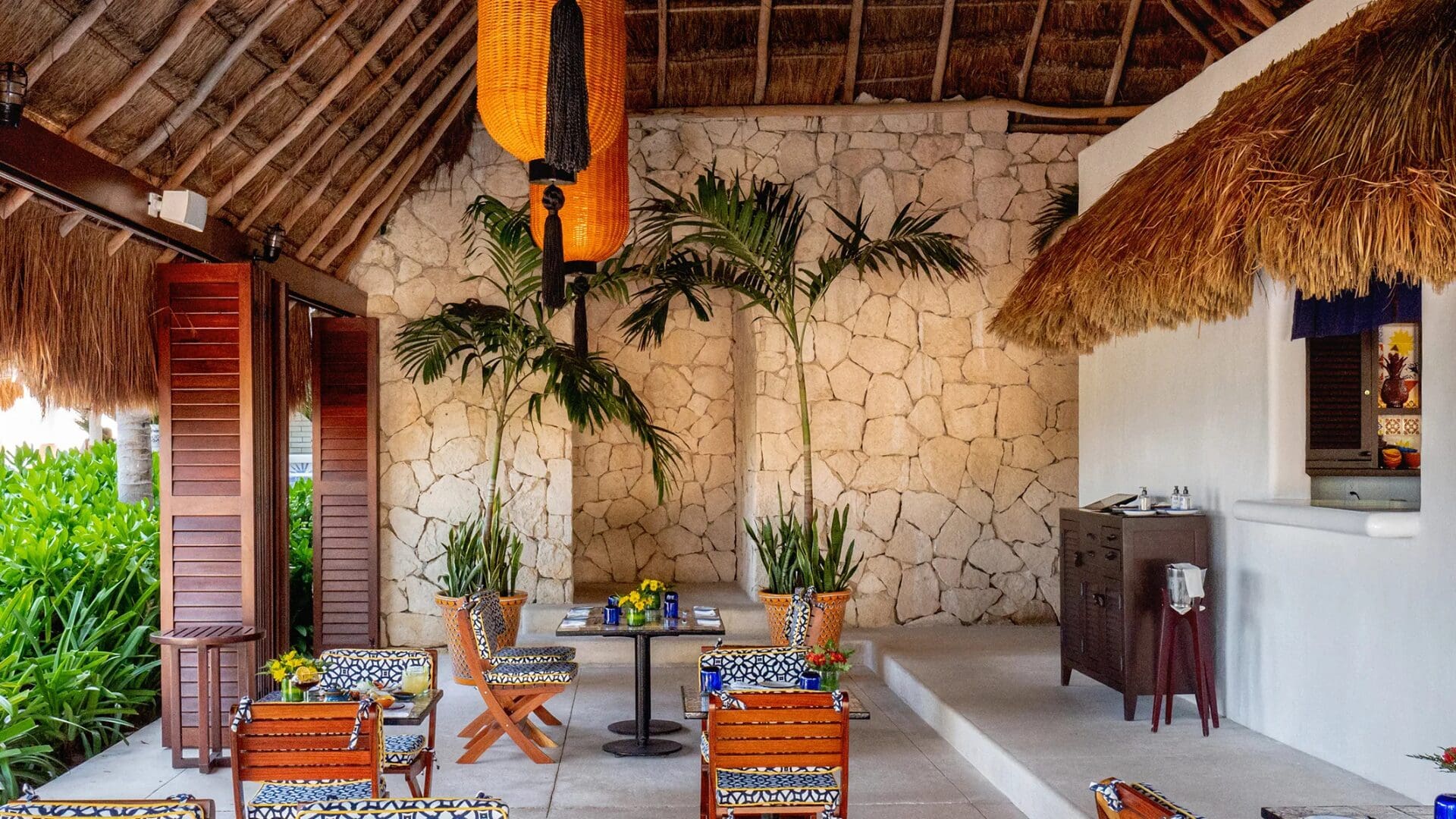
Hotel Esencia is proof that being interested in interiors doesn’t necessarily mean wanting more of them.
The 50-acre estate sits on Xpu-Ha, between Tulum and Playa del Carmen, and began life as the private hideaway of an Italian duchess. Its Main House still forms the heart of the hotel, with paths leading through tropical gardens towards its suites and villas.
The aesthetic is considerably more restrained than some of the hotels on this list: white walls, clean lines, pale fabrics, natural materials and carefully chosen art and furniture. But the simplicity is deceptive. This is the kind of interior where the shape of a chair, the placement of an object or the quality of the linen suddenly matters much more because there’s nowhere for it to hide.
It’s also an excellent example of design responding to climate. Interiors don’t compete with the palms, sea or extraordinary Caribbean light outside; they frame them.
Hotel Esencia has been enormously influential on the particular strand of Mexican barefoot luxury that followed – although few places manage to make it feel quite this effortless.
The design detail we love: the white-on-white rooms, broken up by art, timber and flashes of colour, that somehow never tip into beach-hotel cliché.
Beaverbrook Town House, London
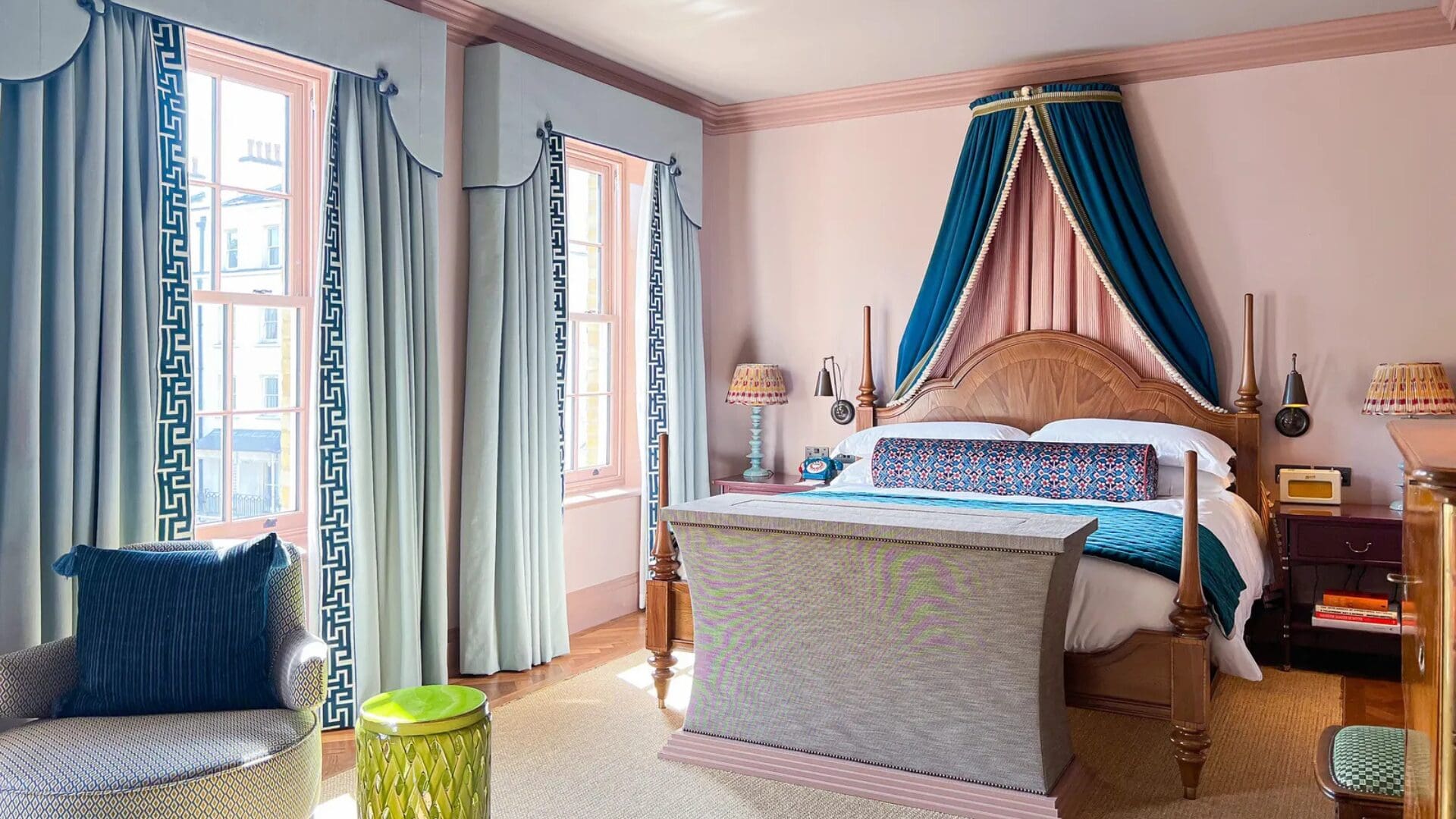
If Ett Hem makes the case for restraint, Beaverbrook Town House makes a very convincing argument for doing rather more.
Occupying two restored Georgian townhouses on Sloane Street, Beaverbrook’s London outpost was designed by Nicola Harding, who imagined the place as the private city home of Lord Beaverbrook: well-travelled, sociable and in possession of a rather excellent collection of things. The result is colourful, eccentric and deliberately layered rather than perfectly coordinated.
There are just 14 suites, each named after a London theatre and individually filled with vintage posters, illustrations, antiques and memorabilia. Expect canopied beds, velvet, patterned textiles and glossy tiled bathrooms in shades of green and blue. Downstairs, the look takes an Anglo-Japanese turn: marbled Japanese papers appear on lampshades and walls, while 19th-century woodblock prints by Hokusai and Hiroshige hang against glossy lacquer in The Fuji Grill.
Then there’s Sir Frank’s Bar, with raspberry-pink seating, stained glass, leather booths and tables decorated with vintage Japanese matchbox covers. It’s maximalism, certainly, but there’s wit behind it. Nothing feels like it was chosen simply because it looked expensive.
That’s what earns Beaverbrook its place among the best design hotels in the world for us: it understands that memorable interiors need character, not just good taste.
The design detail we love: the Japanese marbled papers turned into bespoke wallpaper and pleated lampshades – exactly the sort of detail you might miss the first time around.
Casa Bonavita, Malta
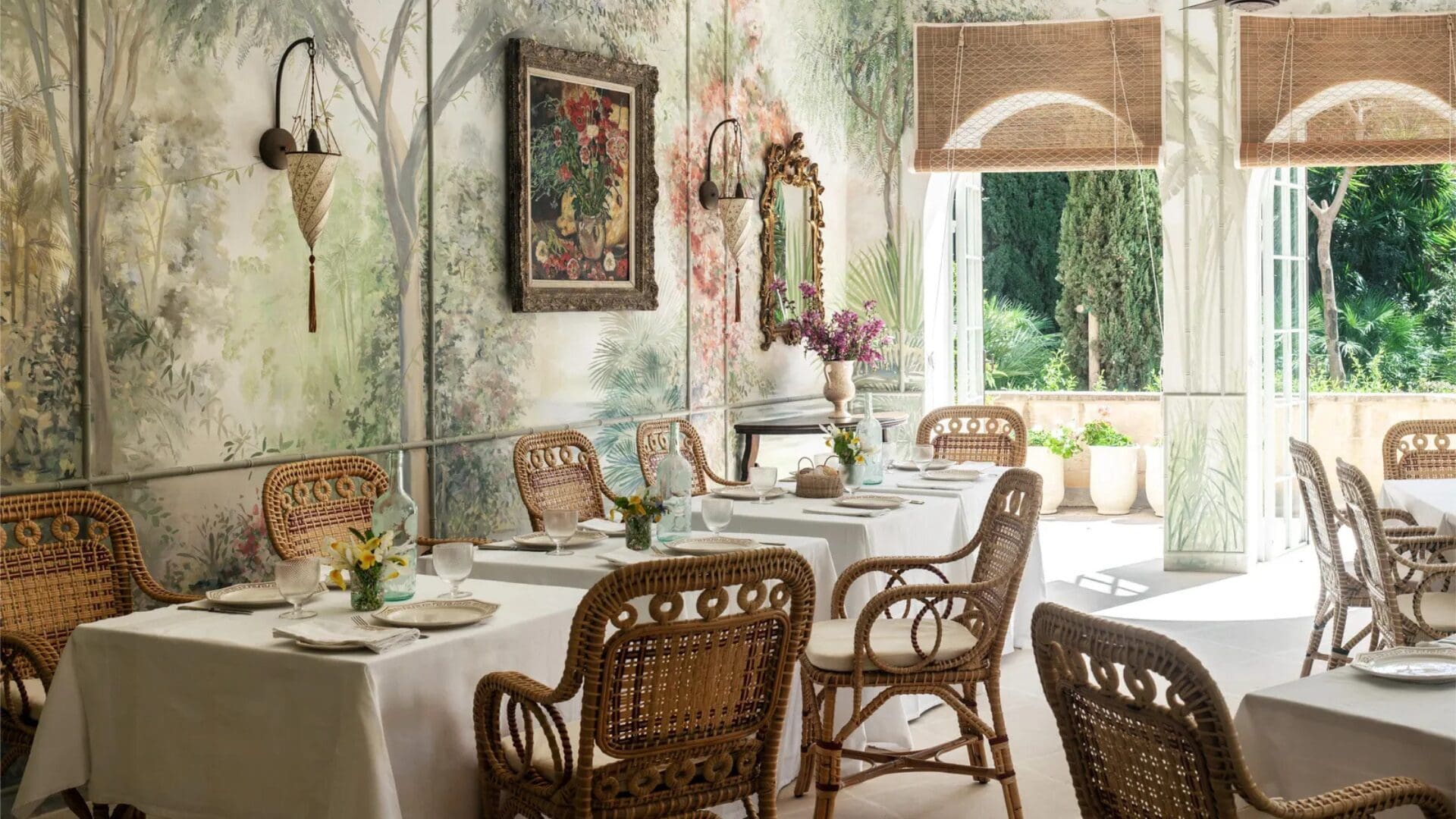
If we were making this list purely on the hotels we most want to nose around right now, Casa Bonavita would be very near the top.
Opened in 2026 in Attard, the 17-bedroom hotel is the work of Christopher and Suzanne Sharp, founders of The Rug Company. They originally bought the 18th-century house as their own home and spent years restoring it before deciding to share it as a hotel. Suzanne grew up in Malta, which helps explain why the result feels so embedded in the island rather than like an imported idea of Mediterranean style.
The interiors are wonderfully layered: antique furniture, inherited family pieces, Murano glass, hand-painted murals, Maltese and Italian craftsmanship, marble, patterned tiles and bespoke de Gournay wallpaper. No two bedrooms are identical, and some are tucked away behind hidden staircases or open onto terraces and gardens.
The Valletta Bar alone makes a convincing case for checking in, wrapped in hand-painted de Gournay wallpaper and kept deliberately low-lit. Elsewhere, a frescoed dining room opens through arches onto a courtyard beneath orange trees, while the house kitchen is actually used for baking pastries and making fresh pasta.
It feels personal because it is.
The design detail we love: that nothing seems to have been bought in bulk. You get the sense every lamp, chair, painting and piece of glass has a story attached to it.
Conrad Athens The Ilisian, Greece
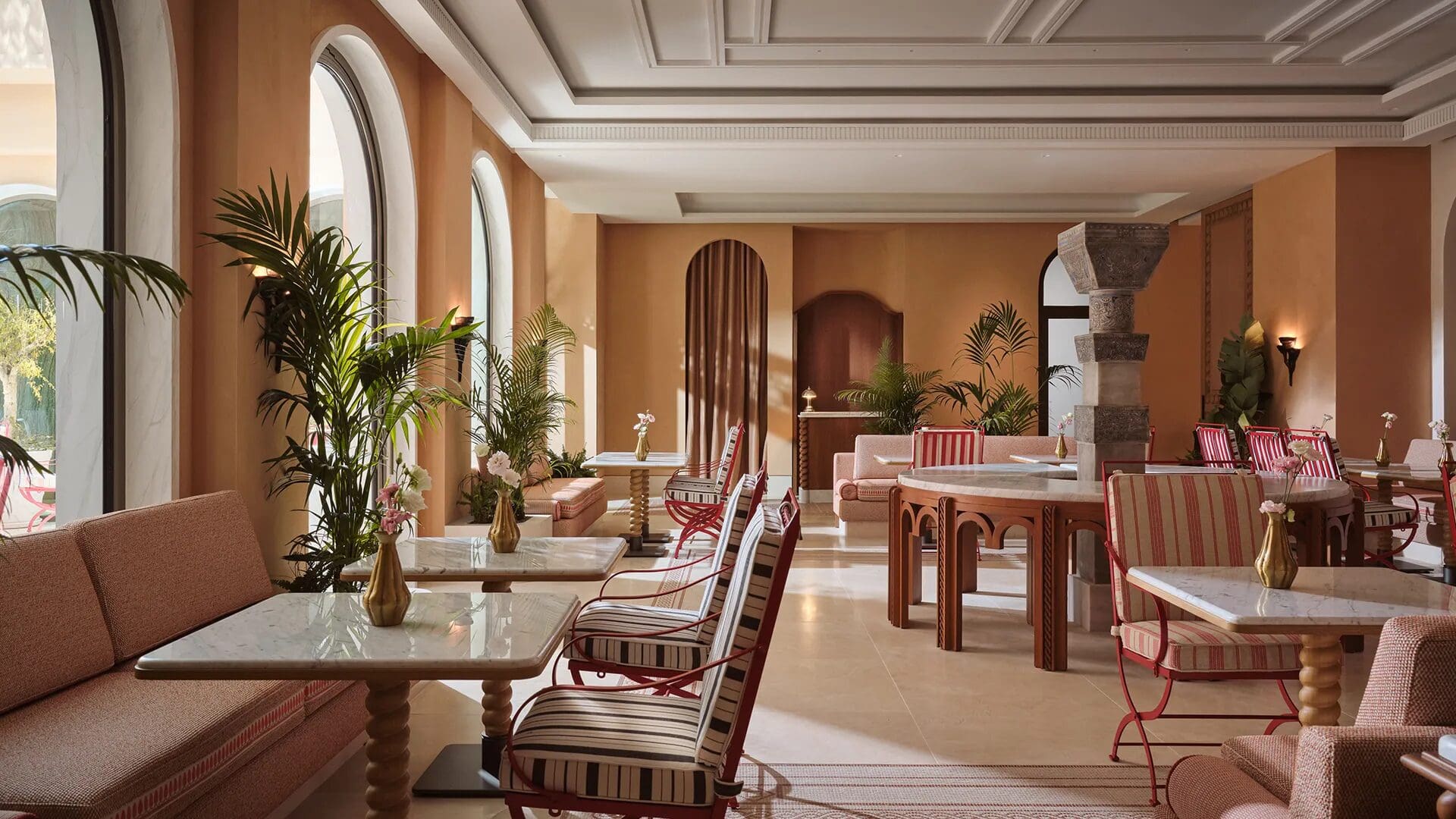
Our newest addition is also an interesting lesson in what happens when designers inherit a building a city already cares about.
Conrad Athens The Ilisian opened in April 2026, occupying the former Hilton Athens, a landmark of Greek post-war modernism that first opened in 1963. Rather than pretending that history never happened, its reinvention has kept some of the building’s most important elements firmly in view.
Most striking are Greek artist Yannis Moralis’s original 620-square-metre sculpted marble façades, which remain part of the building. Inside, AvroKO has looked back to the optimism of Athens’ mid-century era, mixing preserved elements with new pieces by historic Athenian furniture atelier Saridis, ceramics by Eleni Vernadaki and a significant contemporary art programme.
It’s a smart approach. Instead of giving Athens another globally interchangeable five-star hotel, the interiors reference the period when the original building was itself a symbol of a changing city.
The hotel is sizeable – 278 rooms and suites – but many have private balconies, and the resort-style outdoor pool gives the whole place a different rhythm from the grand city hotels of central Athens.
There’s more design pedigree in the restaurants too: Tristan Auer has designed the brasserie interiors, while Yabu Pushelberg is behind Japanese restaurant Onuki.
The design detail we love: keeping Moralis’s monumental marble work exactly where it belongs. Sometimes reinvention is as much about preservation as creating something new.
Planning a design-led escape?
Beautiful interiors alone aren’t enough to make a great hotel – but when good design, brilliant service and a genuine sense of place come together, we’re very interested.
If one of these has prompted your next trip, get in touch with RASK Travel. We can advise on the hotel, the rooms and suites worth knowing about, and everything else around the stay, creating a trip that looks good on Instagram but is considerably better in real life.
Fill out our contact form, and we’ll start planning.


